
Published on | General
Written by William Phillips – Aston University.
When conducting a placement in such a unique museum and archive, you come across plenty of items, holdings, and displays that pique your interest. But while I was diving into the Forward Magazine series, indexing interesting information throughout, one satirical cartoon completely threw me off – it was a cartoon that mocked the 1967 Road Safety Act. This law, that banned driving under the influence of alcohol, is taken for granted in modern Britain; everybody accepts that driving while tired, under the influence of alcohol/drug, or without a licence is illegal. Whereas this cartoon showed that even those who enforce the law thought it was worthy of being mocked in their own publication.
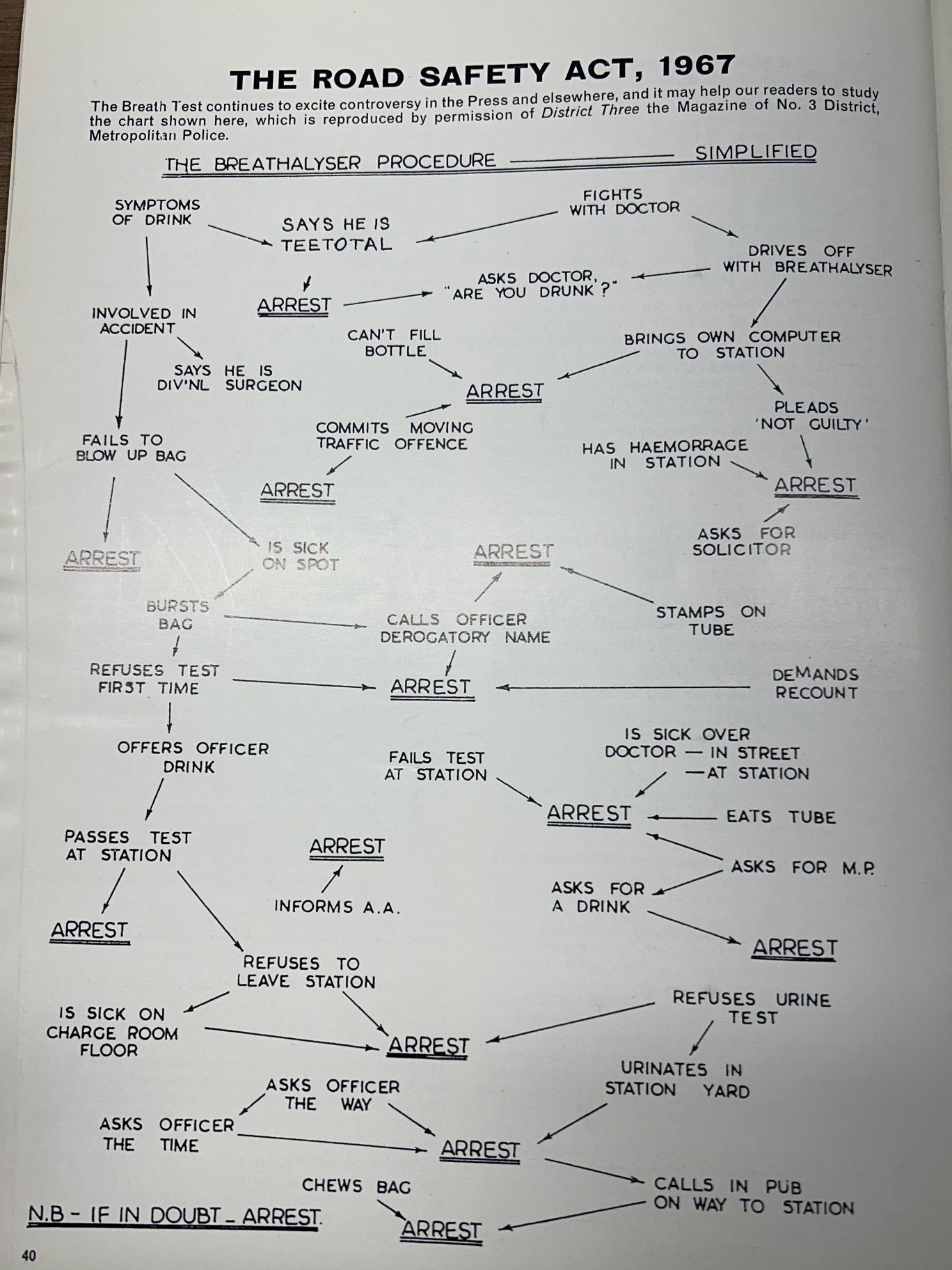
So, out of pure interest, I conducted some research around the law itself and how the 1967 Road Safety Act developed in the eyes of the public. For one, the blood alcohol limit that was introduced in 1967 was 80 micrograms of alcohol/100 millilitres of blood, whereas today it is 35 micrograms of alcohol/100 millilitres of blood. This means that the drink driving limit was over double what it is today, but many people saw this as an infringement of their civil liberties.
One man when interviewed about the new law believed that the law should go two ways; questioning what happens if a drunk pedestrian was to walk into the road and be hit by a sober driver. Such a view on driving under the influence would be branded ludicrous in today’s society, so why was the law met with so much anger? Well, this was because such a law outlining the personal condition of a citizen when completing an action was brand new. Some people believed that Police would abuse powers to make sure people were given de-facto breath tests any time during the day, and others believed that it was the government attempting to bring in prohibition.
In the end, the law benefitted the public as deaths by dangerous driving reduced, and people saw the positives of enforcing these standards on the public, but the fight to establish such a controversial law was one worth fighting.